Tuesday, 8 July 2014

foods can help you shed body weight
Delicious foods that help you diet? It sounds too good to be true.
No doubt: Weight loss comes down to simple math. You have to eat fewer calories than you burn.
"Certain
foods can help you shed body weight," says Heather Mangieri, RD, a
spokeswoman for the Academy of Nutrition and Dietetics, "because they
help you feel full longer and help curb cravings."
Some even kick up your metabolism. So take this list when you go to the supermarket:
1. Beans
Inexpensive, filling, and versatile, beans are a great source of protein. Beans are also high in fiber and slow to digest. That means you feel full longer, which may stop you from eating more.
2. Soup
Start
a meal with a cup of soup, and you may end up eating less. It doesn’t
matter if the soup is chunky or pureed, as long as it's broth-based. You
want to keep the soup to 100 to 150 calories a serving. So skip the
dollops of cream and butter.
3. Dark Chocolate
Want
to enjoy chocolate between meals? Pick a square or two of dark over the
milky version. In one study, chocolate lovers who were given dark
chocolate ate 15% less pizza a few hours later than those who had eaten
milk chocolate.
4. Pureed Vegetables
You can
add more veggies to your diet, enjoy your "cheat" foods, and cut back on
the calories you’re eating, all at the same time. When Penn State
researchers added pureed cauliflower and zucchini to mac and cheese,
people seemed to like the dish just as much. But they ate 200 to 350
fewer calories. Those healthy vegetables added low-cal bulk to the tasty
dish.
5. Eggs and Sausage
A protein-rich breakfast may help you resist snack attacks throughout the day.
In a study of a group of obese young women, those who started
the day with 35 grams of protein -- that’s probably way more than
you’re eating -- felt fuller right away. The women ate a 350-calorie
breakfast that included eggs and a beef sausage patty. The effect of the
high-protein breakfast seemed to last into the evening, when the women
munched less on fatty, sugary goods than the women who had cereal for
breakfast.
6. Nuts
For a great snack on the
run, take a small handful of almonds, peanuts, walnuts, or pecans.
Research shows that when people munch on nuts, they automatically eat
less at later meals.
7. Apples
Skip the
apple juice and the applesauce and opt instead for a crunchy
apple. Whole fruit blunts appetite in a way that fruit juices and sauces
don’t.
One reason is that raw fruit has more fiber. Plus, chewing sends signals to your brain that you’ve eaten something substantial.
Reviewed by
Arefa Cassoobhoy, MD, MPH
Delicious foods that help you diet? It sounds too good to be true.
Thursday, 26 June 2014
EXTENSION OF THE VALIDITY PERIOD OF THE SOCSO’S HEALTH SCREENING VOUCHERS

Dear Panels,
We are please to announce that the validity period of the 2013 HSP Vouchers, which are due to expired on the 30th June 2014 is now extended until the 31st December 2014.
Tuesday, 10 June 2014
Friday, 6 June 2014
There's more to vitamin D than meet the eye
 Given
the important role of vitamin D in bone health, in general, people with
low levels of vitamin D in their blood have lower bone density and
higher risk of fractures. One way to get vitamin D is from the sun; but
because darker skin absorbs less UVB rays, the levels of vitamin D are
often lower among blacks and other ethnicities with dark skin stones
compared to whites.
Given
the important role of vitamin D in bone health, in general, people with
low levels of vitamin D in their blood have lower bone density and
higher risk of fractures. One way to get vitamin D is from the sun; but
because darker skin absorbs less UVB rays, the levels of vitamin D are
often lower among blacks and other ethnicities with dark skin stones
compared to whites.However, a puzzling observation is that although more blacks than whites are diagnosed with vitamin D deficiency, blacks have higher bone mineral density scores and a lower risk of fractures compared to whites. Researchers from Boston interested in further exploring this phenomenon decided to test whether Vitamin-D Binding Protein had a part to play in solving the puzzle.
Vitamin D does not normally float around freely in our blood. It is bound to proteins, the most common being Vitamin-D Binding Protein (DBP). Less than 1% of vitamin D is present in a free, unbound form. What effect does being bound to proteins have on vitamin D? Research suggests that vitamin D cannot function fully when it is bound and needs to be free of any binding proteins in order to get into cells and perform its functions. However, the tests researchers and clinicians use to measure vitamin D levels do not differentiate between the bound and unbound forms of vitamin D.
Another important point to keep in mind is that the structure of DBP can differ based on one’s genetic makeup. Each form of DBP protein varies slightly in terms of how strongly it can bind to vitamin D. Researchers have also noted that certain variants of DBP show up more frequently in certain racial groups compared to others.
Given all of this information, Dr. Powe and her colleagues wanted to find out whether black and white Americans differ in terms of the types and amounts of DBPs present in their bodies, and whether these differences affect vitamin D levels. They conducted a study including 1,181 black participants and 904 white participants with an average age of 48 years.
Two results from their study were similar to results from many other studies: on average, blacks had lower total vitamin D levels compared to whites and blacks also had higher bone mineral density compared to whites. But black participants, on average, also had lower levels of DBP. Genetic analysis indicated that blacks in the study more commonly had a variant type of DBP gene, which was associated with lower DBP levels, i.e. people who carried this DBP gene also tended to have lower levels of the DBP protein in their body.
It seems that low levels of both vitamin D and vitamin D-binding protein in blacks essentially result in similar amounts of estimated free unbound vitamin D as in whites. This is a crucial point as it would mean that a vitamin D test result in blacks showing low vitamin D levels may not necessarily indicate deficiency in vitamin D. The study authors suggest that low blood levels of total vitamin D do not indicate vitamin D deficiency if the levels of DBP are also low, as may be the case in many blacks.
This study, published late last year in the New England Journal of Medicine, is important because it challenges us to reconsider how we define vitamin D deficiency. More follow-up studies need to be done to confirm these results and also to test whether vitamin D-binding protein levels affect fracture and osteoporosis risk.
Reference: Powe CE, Evans MK, Wenger J, et al. Vitamin D-Binding Protein and Vitamin D Status of Black Americans and White Americans. N Engl J Med 2013;369:1991-2000. doi:10.1056/NEJMoal306357.
Taken from http://osteoconnections.com/
Thursday, 5 June 2014
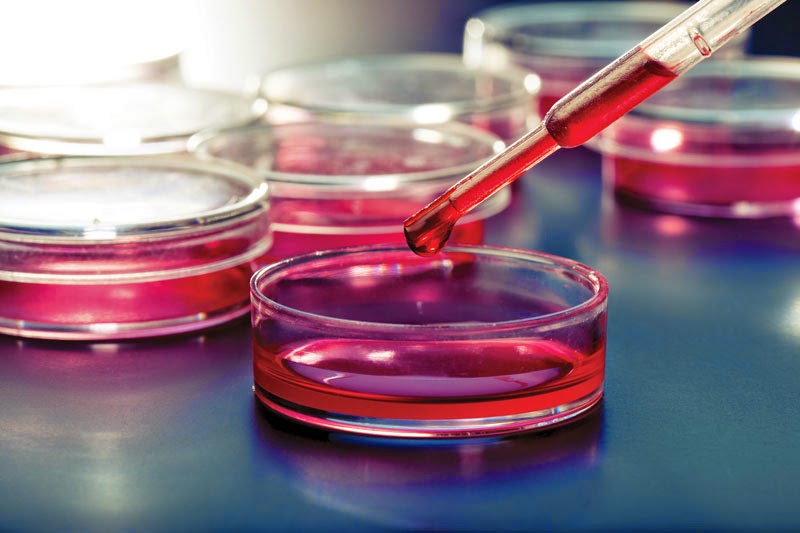
Can stem cells treat hypertension?
Can
stem cells treat hypertension?
Apr 2014 , Dr. Nicolo Cabrera
With prominent personalities
swearing by stem cells, physicians must keep a close eye on this novel
treatment modality. During the 10th Asia-Pacific Congress of Hypertension, Dr.
Eva Maria Cutiongco-dela Paz of the Philippine Genome Center and the Institute
of Human Genetics at the National Institutes of Health brought physicians up to
speed on the basic science on stem cells and how it may be applied to
hypertension.
Stem cells are distinct
non-specialized cells that can replicate and create multiple identical copies
of themselves. They also retain the ability to develop into various specialized
cell types.
Embryos and fetuses are obvious
sources of stem cells but are hounded by ethical concerns. Alternatively, stem
cells may be sourced from amniotic fluid, placenta or umbilical cord. Most
recently, adult somatic cells may be induced to become pluripotent stem cells
(ie, induced PSCs or iPSCs), making them among the least ethically
controversial manner of harvesting pluripotent stem cells.
Despite all the excitement,
Cutiongco-dela Paz advocates a cautious approach to stem cell therapy. “[W]e
should all recognize that at the present time... [stem cell therapy] has been
established as a clinical standard of care for some conditions such as
hematopoietic stem cell transplants for leukemia, epithelial stem cell-based
treatments for burns and corneal disorders and some rare immune deficiencies.
Published clinical evidence has been unable to support the use of these
therapies for routine disease treatment.”
With respect to cardiovascular
disease in general, Cutiongco-dela Paz determined that there are many ongoing
clinical trials for the use of stem cells for heart failure, angina and
cardiomyopathy. However, as some are not randomized, findings must be received
with a ‘grain of salt’.
The potential use of stem cells to
treat hypertension is also being studied since damaged endothelial cells are
usually replaced by stem cells mobilized from the marrow that convert into
endothelial progenitor cells. In early hypertension, an increase in circulating
endothelial progenitor cells has been documented even with good blood pressure
control.
Angiotensin has also been shown to
reduce telomerase activity and accelerate senescence. Consequently, giving
hypertensive cats candesartan, an angiotensin II receptor antagonist, restored
the number and function of progenitor cells. Humans given
angiotensin-converting enzyme inhibitors showed improved function and increased
number as well.
The exact role of these progenitor
cells in hypertension has not been sufficiently elucidated, but in the future
these may be targets of future treatment options for the disease.
Cutiongco-dela Paz, while eagerly awaiting the development of the research,
also puts the excitement into perspective, “We should all keep in mind,
however, that the use of stem cells in hypertension is still in its infancy.”
Subscribe to:
Posts (Atom)